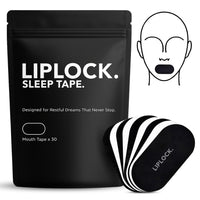
LipLock Mouth Tape is a gentle sleep tape made to keep your lips closed overnight and encourage breathing through your nose. 30 strips per pack, one per night.
Mouth Tape for Sleeping, Made Simple
Mouth taping is exactly what it sounds like: a soft strip over closed lips at bedtime, so you default to nasal breathing while you sleep. LipLock is built for comfort first. The adhesive holds through the night and peels away cleanly in the morning, without the sting of ordinary tape.
Why LipLock
-
Gentle on skin — hypoallergenic, latex-free and BPA-free
-
Lightweight and flexible — shaped to sit comfortably over the lips
-
Easy off — peels away without pulling
-
30 strips — a month of nights for £7.99
How to Use Mouth Tape
- Start with clean, dry lips. Skip lip balm beforehand or the strip will not hold.
- Peel one strip from its backing.
- Close your lips and apply the strip over them for a comfortable seal.
- In the morning, peel slowly from one corner.
New to mouth taping? Try a strip for 10 to 15 minutes while reading in the evening first, to check you are comfortable breathing through your nose.
Part of Your Wind-Down
LipLock pairs with the Clique 4-in-1 glasses: red lens on for the last hour of the evening, tape on at lights out.
FAQs
Is mouth tape safe?
Mouth taping is not suitable for everyone. Read the warning below before use, and do not use it if you cannot breathe comfortably through your nose.
Does mouth taping work?
Many people use it to build a nasal breathing habit and like how it feels. Research is still limited, so treat it as a comfort and routine aid, not a treatment. Mouth tape does not treat snoring or sleep apnoea. If you snore heavily or wake unrefreshed, speak to your GP.
Will it hurt to remove?
The adhesive is designed to release gently. Peel slowly from a corner. Do not use on chapped or broken lips.
Can I use it with a beard or moustache?
Facial hair can weaken the hold. The strip sits over the lips themselves, so many people with short facial hair get on fine.
Warning: Not suitable for individuals under 18, pregnant individuals, or those with nasal congestion, sleep apnoea or other respiratory issues. Avoid use if you have heart conditions, a risk of vomiting, or are under the influence of alcohol, drugs or sedatives. Do not use on chapped or broken lips or open sores around the mouth. Consult a healthcare professional before use if you are on medication or have a medical condition. LipLock is not a medical device and is not intended to diagnose, treat or prevent any condition.